The Oxford Test of English will soon be offered at test centers in China and Thailand. Congratulations to the team at OUP! That’s one step closer to my backyard!

China is an interesting case. Regular readers know that the two big English tests in that country – IELTS and TOEFL – are administered in partnership with the NEEA, a public agency associated with the Chinese Ministry of Education.  Test registration is done through an NEEA portal. The NEEA collects registration fees and later passes them along to ETS and the British Council… after pocketing an unspecified amount.

This is probably good for test takers as the NEEA is known for blocking price hikes and upselling. It also mandates that registration fees be charged in RMB. It probably isn’t great for testing firms, as the NEEA is known for blocking price hikes and upselling. It also mandates that registration fees be charged in RMB.

Not all language tests are required to operate in partnership with the NEEA. This is because there are two types of language tests in the eyes of the Chinese regime – we might translate them as “educational tests” and “commercial language proficiency exams.” The former must be administered in partnership with the NEEA, while the latter can be administered with any local partner.

The biggest English test to operate without NEEA partnership is the PTE. Pearson partners with an on-shore company called Beijing Ensi (d/b/a Pearson VUE China).

In the case of Oxford, that partner will be a group called GEC.

A funny case is that of Prometric. They run the CELPIP with local partners, but run the CAEL with the NEEA. Which makes sense, as the CAEL is used for educational purposes, while the CELPIP is not.

There is a point to all of this. Anyone who cares enough to still be reading already knows that the IELTS test is run in China through a partnership between the British Council and the NEEA. IDP Education is not involved, but traditionally the British Council paid them a per-test royalty as a sort of booby prize in recognition of their partial ownership of IELTS.

Last year, IDP gave up that royalty and began administering the IELTS themselves. It is my understanding that their strategy was to brand themselves as a provider of a commercial language proficiency exam. This was done with an unnamed local partner referred to by CEO Tennealle O’Shannessy as “a respected professional examination service provider.” Someone once told me the name of that partner, but I’ve long forgotten. I could look it up, if anyone cares.

That went well for a few months. But by December, testing had ceased. IDP is now in negotiations to resume testing. I don’t know how those negotiations are going.

I’ve always wondered how Pearson managed to skirt the NEEA requirement. I know that it is used for both educational and non-educational purposes.  Maybe that’s enough. But so are the IELTS and TOEFL tests, to some extent.  And, surely, they would like to be free of the NEEA.

The GRE snapshot for 2019-2024 is now available (or maybe I missed it when researching earlier this week).  A few things are worth noting:

  1. The total number of tests taken in 2023/24 is actually lower than my earlier estimate.  The total is actually 256,215 tests for the year.  That’s the lowest figure (by far) for years in which data is readily available.
  2. The drop in India between 2022/23 (110,512 tests) and 2023/24 (59,113 tests) is staggering. I think you have to go back to 2013 to find such a low number from India.

It really seems like ETS’s hyper-fixation on the Indian market has produced little of value when it comes to revenues. I don’t like to pick on an organization when it’s down*, but it is worth mentioning.

Remember that spending is only possible insofar as ETS keeps collecting test taker fees.  Those fees are often exorbitant. And those test takers are often young people from modest backgrounds.

When the next round of leadership changes inevitably hit, it might be worth cataloging some of the most puzzling uses of test taker fees over the past three or four years.

*Fact check: He does.

The Educational Testing Service has published updated interpretive data for the GRE Test.  The rolling three year total of test takers is now 930,062 for the period from July 1, 2021 to June 30, 2024.  Check that link for the new percentiles.

The test was taken 256,215 times in the most recent year.

Here are the historical test volumes:

  • 2018/19: 532,826
  • 2019/20: 467,277
  • 2020/21: 366,689
  • 2021/22: 341,574
  • 2022/23: 319,101
  • 2023/24: 256,215

#GRExit is real.

As far as I can tell, the all-time high was 2015/16 when the test was taken 584,677 times. That was the year before Science published “GREs don’t predict grad school success. What does?” and The Atlantic published “The Problem with the GRE.”

The all time high for India appears to have been 2020/21 when the test was taken 111,476 times in that country. The total for  2023/24  was just 59,113 tests in India.

I’ve written a few times about how ETS’s super-duper focus on the Indian market in recent years seems to have produced negligible (or negative) returns. TOEFL volumes seem flat at best, and GRE volumes have actually dropped since it all kicked off. One is left wondering about the point of it all.

While we’re on the topic of live proctoring vs async proctoring, here’s something that was posted to the GRE subreddit just three hours ago, with the subject line “I hated the at-home test experience.”

“Just took the at-home test today. My nearest testing location is a bit of a drive, so I thought it would be easier to take it at home. Big mistake on my end! I can’t speak for everyone, but I had a lot of issues mostly with the proctors. The first proctor I had couldn’t get their microphone to work, and that took about 45 minutes to figure out. I finally got fed up and asked to switch proctors. I got connected to somebody else and thankfully it worked, but they were really mean and I almost cried because of how frustrated I was 😭😭 It took about an hour and 15 minutes before I finally could start the test.

I am not particularly good at taking standardized tests, so I knew it was going to be difficult. I actually felt adequately prepared before I took the test. But my testing anxiety plus the technical difficulties caused my brain to shut down and I just couldn’t answer the questions. When I retake it, I’m just going to suck up the drive and take it in person so I don’t have to deal with those technical problems.”

And in response to a follow-up question:

“As for the second proctor, I couldn’t hear them very well and it was hard to understand. I kept asking them to repeat themselves because I couldn’t understand and they got frustrated with me which was fair. Once everything was checked I felt their tone was really condescending and on top of that I still couldn’t really understand them 😭😭 Mean is a strong word and maybe I was already stressed and being delusional. I don’t know, this was a weird experience.”

This sort of comment is typical of the remote testing era. Social media has been chock full of this sort of sentiment for the past five years.

The point I’ve been trying to make in recent posts is that sometimes live proctoring solves problems. But other times it creates problems. Ideally, a test maker will use software to prevent problems from appearing in the first place, and offload functions that would normally be carried out by a live proctor to a more robust customer service department. Given that we’re five years into this experiment and complaints are just as frequent as when it started, maybe it is time for test makers to accelerate the transition to async.

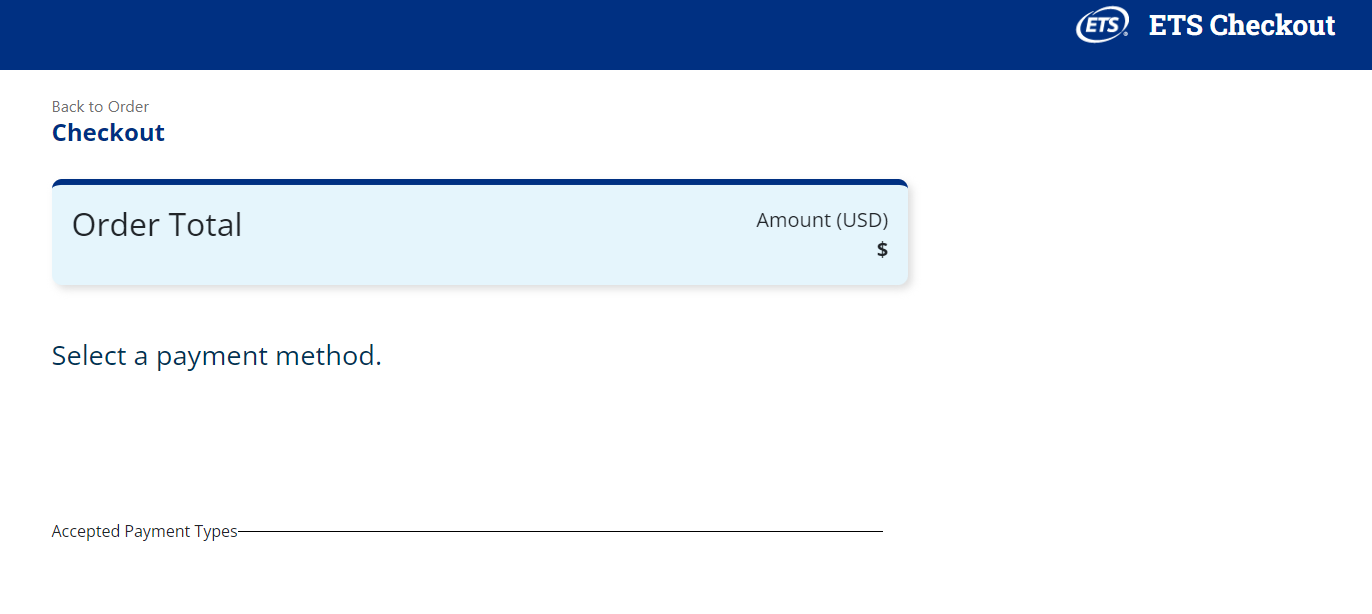
Around February of this year the Educational Testing Service started adding a 4% “online service fee” to GRE registrations (and other transactions). It appears at checkout.

I believe a similar fee was added to Praxis registrations last year.

It has not yet been added to TOEFL registrations.  But let me know if you spot it sometime after I publish this post!

Supplementary GRE fees were just hiked. It now costs $40 to send a score report after the test (a $5 increase). Rescheduling a test date now costs $55 (also a $5 increase).

I’m glad to see that the GRE website has already been updated to reflect these changes. Remember that while supplementary TOEFL fees were hiked about a month ago, the TOEFL website still lists the old prices. As a result, many test takers only learn the actual cost of essential services after they have financially committed to taking the TOEFL. That’s not good; indeed, some* have argued that it raises ethical concerns related to ETS’s commitment to fairness and transparency.

*Just me, really.


Here’s the GRE Coupon tracker!  I’ve also got a TOEFL coupon tracker.

Update:  Try the code DREAMBIG25 to save $55 on your registration.  Today is January 5, 2025 and the code works.  I don’t know when it will stop working.

Update:  According to Internet scuttlebut, the code GREBF24 will be activated November 29 and offer a $70 discount in the USA and Canada.

Update:  According to ETS’s instagram channel, the code IDA40 will get you a $40 discount.  Must be used before September 30, 2024 I think.

Update:  An e-mailer today (August 29, 2024) noted that the code  STEM2024 got her a $33 discount!

Update:  The code TAKE2 will probably get you a $60 discount.  I don’t know the validity period.

Update:  The code CC25A or CC25T should get you a Rs.4777 discount (maybe more) in India.  I don’t know the validity period.

Update:  Someone else got an email from ETS which suggested that the code COMEBACK-70 would give them a $70 discount.  Again, registration must be completed by July 4, 2024.

Update:  According to an email I just got from ETS, the code COMEBACK60 is good for a $60 discount.  Registration must be completed by July 7, 2024 (the test can be after that date, of course).

Update:  Try the code GRESUMMER60 to get a $60 discount.  It may not work in every country, but should certainly work in Europe, the Middle East and North Africa.  Today is June 26, 2024.

Update:  The code GREBUS50 will get you a $50 discount on GRE registrations completed before July 31 of 2024.  Details here.

Update:  According to people all over social media, the code COMEBACK70 will get you a $70 discount on GRE registrations.  Today is April 28, 2024 and it works.

Update:  ETS emailed me today (March 23) to tell me that CC24 is still good for an INR 1000 discount.  India only, obviously.

Update:  ETS launched a new Instagram campaign with some discount codes.  Check the descriptions of the following videos for the codes:  here, here and here.  Complete the registration before March 15.

Update: ETS just announced on social media that the code NEW2024 is good for a $50 discount on registrations for test dates before April 30 of this year.  I am not sure when the code expires.  Test-takers in India should probably use INDNY24 or BI2024 to get a discount of ₹ 4000.

Update: My man John Healy went to the big ETS event in Italy this month and got the coupon code ITALYGRE23 which is good for a $30 discount in Italy only.  It must be used before December 31.  Smart people might try changing the country name to discover discounts for other places.

Update: The code GREBF23 is good for $75 off registrations (USA and Canada only) before March 31 of next year. That’s the best deal on the test I’ve ever seen.  The code will work until November 27, apparently.  Worth trying a day or two after, though.  It’s a GRE Black Friday sale!

Update: I got an email from ETS India that says the code CC24 is good for a discount of INR 1000.  Only in India, obviously.

Update: The code GRE4LAW will give you a $60 discount on test dates before December 31, 2023. More details over here.  Someone on Reddit asked ETS and, yes, this can also be used by people not going to law school. 🙂

Update:  According to the social media accounts of ETS Global, the code GRE602023 will get you a $60 discount if you register for a test date before September 20.  People in India should use INDTEST2023 instead.

Update: I think the SOCL20 code ($20 discount) has been extended until the end of April.  Leave a comment if it works for you.

Update: Get a $20 discount on the GRE by using the code SOCL20.  This one is valid until March 31, 2023.  I got it from the ETS social media accounts.  It worked for me when I tested it today (March 23).

According to social media, you can use the coupon code NEWYEAR50 to get a $50 discount on the GRE General Test.  I don’t have a terms and conditions link, but I think registration must be completed before January 31, 2023.  The test must be taken in:  Canada, Egypt, France, Germany, Ghana, Guam, India, Italy, Kenya, Mexico, Netherlands, Puerto Rico, Saudi Arabia, Spain, Turkey, United Arab Emirates, United Kingdom, or the United States.  I tested this with a registration for a test center in the USA and received the discount.

Let me know with a comment down below if it works for you.

GRE coupons don’t come up very often, but I will update this page if I find any more.  Bookmark it and come back later.  And, of course, please share any active codes you locate.  Note that I also track TOEFL coupon codes, which are pretty common.
Here’s a gallery of recent social media complaints from people who are getting stuck on the “search service” screen when trying to register for the TOEFL test. I wrote about this weeks ago. I first read about it months ago.

I’ve always been struck by how bugs like this are able to linger for weeks or months… or even years. To my eye, ETS seems much slower to fix things than other firms.

This particular bug should be shunted right to the front of the queue as it impacts what has emerged as one of ETS’s most lucrative niche markets – individuals who must take both the GRE and an English test for graduate studies.

ETS has made great strides in recent months when it comes to creating a fun social media profile. Regardless, the company’s rep on socials remains a periwinkle-hued nightmare. One doesn’t have to look too far to find complaints about registration bugs, score cancellations, unresponsive customer service and unhelpful proctors.

As a fun bonus, I’ve included a complaint from a fellow complaining that his proctor forgot to turn off his microphone and unknowingly interrupted the speaking section of the test.

Poets and Quants reported last month that The Ohio State University will no longer accept at-home GRE scores due to concerns about cheating.

Says the article:

“Business schools have overturned acceptances to dozens of African MBA candidates after they were suspected of cheating on the virtual GRE. The cheating scandal on the at-home GRE test, introduced during the pandemic, has caused some MBA admission officials to lose confidence in the security measures put in place by the Educational Testing Service, the administrator of the GRE.”

Programs mentioned in the article include The Ohio State University’s Fisher College of Business and the University of Minnesota’s Carlson School of Management.

An assistant Dean at Carlson is quoted as saying:

“At least 25 people in Nigeria succeeded in getting their scores through and then it scaled after they told other applicants. It is a testing issue, not a cultural or geo-political issue.”

Officials from The Ohio State University have asked ETS to audit recent results.  That audit was ongoing at the time P & Q published the article.

Some readers might have noticed that GregMat’s YouTube channel is offline.  According to Greg, that’s due to a copyright strike filed by ETS.

If anyone at ETS is reading this, listen up.  You shouldn’t do this sort of stuff.  In order for your tests to thrive you need a vibrant community of Youtubers, prep providers and book authors.  This is especially true when you’ve got a test like the GRE that is on the ropes.  I know, I know, you’re thinking “we don’t need that sort of community because we sent branded bluetooth speakers to some Instagram influencers!”  But seriously, you do need it.  Greg was your very best GRE ambassador, and was quickly becoming your best TOEFL ambassador.  Especially among people in your #1 target demo (young dudes from India).

Update:  The copyright-striked Vince Kotchian too. So dumb.  The guy was just on “Tests and the Rest” saying decent things about the GRE.

Update:  Lots of traffic here in 2024.  It is worth trying the code GREBF24 starting around November 29.  I’ll update this if ETS contacts me.

In case ya missed it, here is an email I got from ETS about their GRE sale for Black Friday:

Through Nov. 27, get the following deals:

Note that to take advantage of both the test and prep discounts, you’ll need to make two separate purchases, as our system allows for only one promo code per transaction.  

Note that this is only good for registrations in Canada and the USA.  The code will stop working at the end of November 27, but might be worth trying into November 28 given time zone issues.

I was happy to learn that ETS is running a summer sale for the GRE.  Use the voucher code “GRE602023” to save $60 on all registrations for test dates before September 20 of this year.  This code will be valid “until supplies last.”  You can also use the code “GRE502023” to save $50 on a second registration for dates up to December 31 of this year.

Note that these codes may not work for people in India.  If you are in India, use the code INDTEST2023 to save money until July 31.

If you are reading this blog post far in the future and the above codes are expired, try SOCL20.  That one often provides a $20 discount.

Changes are coming to the GRE subject tests. They are:

  1. After the April 2023 administration, the Chemistry test will be discontinued.
  2. The Physics and Psychology tests will be shortened to two hours.
  3. After April 2023, the Mathematics, Physics and Psychology tests will be offered on computer at test centers, and via at-home testing.

Read about these changes on the ETS website.

The subject tests have really  been whittled down to just the basics.  The Biochem test was eliminated in 2017, while the Biology and Literature tests were eliminated in 2021.